Check All Squares Containing Your Dignity: A CAPTCHA Psychological Autopsy
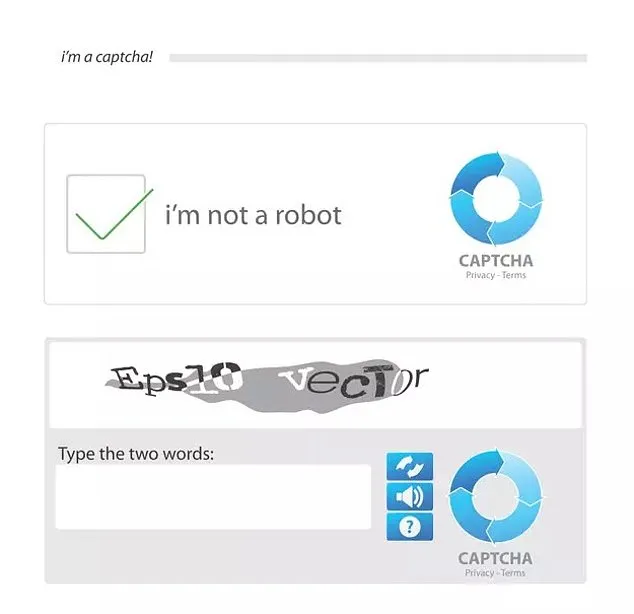
Photo: CAPTCHA traffic light grid on computer screen close up, via i.dailymail.co.uk
You are not a robot. You know this. You have feelings, memories, and a strong preference for not being asked to identify a bicycle in a nine-panel grid. And yet, there you are, squinting at a blurry image of a crosswalk, wondering if the pole counts, if the curb counts, if the shadow counts, and whether a machine has just tricked you into revealing that you do not, in fact, understand what a crosswalk is.
The CAPTCHA is one of the most reliable rituals of modern American life. It appears when you try to buy concert tickets, log into your bank, or access a government form that was last updated when dial-up was considered fast. It asks you to prove your humanity. It does so by showing you pictures that look like they were taken by a security camera in a dream.
The Ritual Begins
First comes the checkbox. 'I'm not a robot.' It is a single square, and it is insulting. You click it. Sometimes that is enough. Sometimes it is not. Sometimes the checkbox opens a portal to a larger grid, and you realize that the checkbox was merely the bouncer, and the grid is the velvet rope.
You are then presented with a prompt: 'Select all images with traffic lights.' You look at the grid. There are nine images. Three contain traffic lights. One contains a traffic light that is mostly a pole. One contains a traffic light that might be a streetlamp. One contains a red blur that could be a traffic light, a brake light, or a portal to another dimension.
You select the obvious ones. You hesitate over the pole. You select it. You feel a small surge of anxiety. You have made a choice. The machine is watching.
The Spiral of Self-Doubt
This is the heart of the CAPTCHA experience: the moment when you stop trusting your own eyes. The images are low-resolution, oddly cropped, and often taken at angles that suggest the photographer was falling down a flight of stairs. You begin to question fundamental concepts. What is a bus? Is that a bus? Where does the bus end and the background begin? If I select the wrong square, will I be denied access to my own email? Will the machine know?
The grid refreshes. It asks you to select all squares with crosswalks. You do it. It refreshes again. It asks you to select all squares with fire hydrants. You do it. It refreshes again. You begin to suspect that the CAPTCHA is not testing your humanity. It is testing your willingness to keep clicking. It is a loyalty program for people who have nowhere else to go.
CAPTCHA as Accidental Modern Art
The images themselves are a genre. They are mundane, blurry, and strangely beautiful in the way that all surveillance footage is beautiful when you are not in it. A school bus at dusk. A fire hydrant in a parking lot. A set of traffic lights hanging over an empty intersection in a town that may not exist.
Some CAPTCHAs look like they were curated by a depressed street photographer. Others look like they were generated by a machine that has heard of sidewalks but has never seen one. The grid is a collage. The prompt is a poem. 'Select all images with stairs.' The stairs are crooked. The world is crooked. You are just trying to log in.
The Uncomfortable Truth
Here is the part that stings: CAPTCHAs are not just tests. They are training data. Every time you identify a traffic light, you are helping teach a machine to identify traffic lights. The machine is learning from you. You are the tutor, the unpaid intern, and the test subject all at once.
This means the CAPTCHA is not asking 'Are you human?' It is asking 'Can you help me become better at pretending to be human?' And you say yes, because the alternative is not accessing your bank account.
The Abandonment of Judgment
By the fourth refresh, something shifts. You stop trying to be accurate. You start trying to be agreeable. You select the square with the pole. You select the square with the shadow. You select a square that is mostly sky because maybe the machine sees something you do not. You are no longer a person identifying traffic lights. You are a person trying to please a checkbox.
This is the true psychological autopsy of the CAPTCHA. It does not prove you are human. It proves you are willing to abandon your own judgment for the chance to move on with your day. That is not a flaw. That is a survival skill. The machine does not care. The machine just wants the crosswalk selected.
So the next time you find yourself staring at a grid of blurry buses and fire hydrants, remember: you are not a robot. You are a human being who has been temporarily reduced to a very tired person clicking on squares. That is still humanity. It is just humanity with worse lighting.