Orphaned, Unidentifiable, and Somehow Multiplying: A Forensic Expedition Through Your Junk Drawer's Cable Graveyard
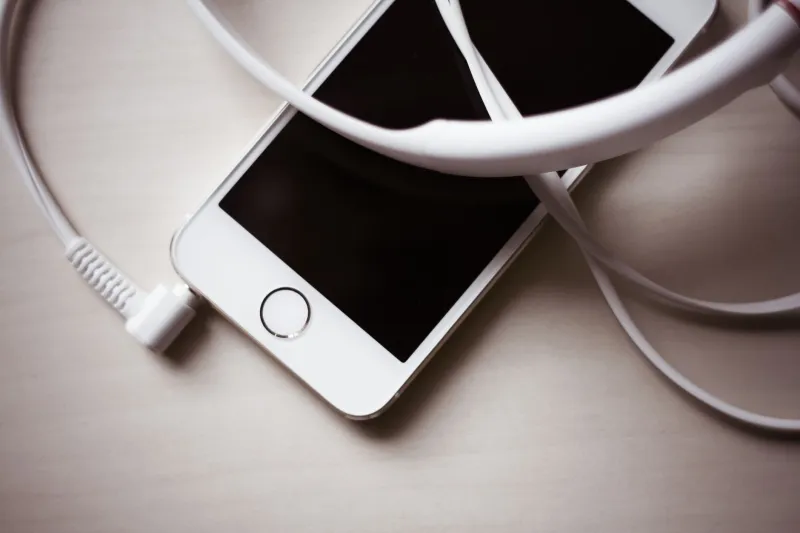
Somewhere in your home — probably in the kitchen, wedged between a takeout menu from a restaurant that has since become a smoothie bar and a single AA battery of unknowable charge level — there is a drawer. And inside that drawer, coiled around each other like a nest of technological serpents, are approximately fourteen charging cables for devices you cannot name, cannot locate, and in several cases, cannot prove ever existed.
You have not thrown them away. You will not throw them away. This article will not convince you to throw them away. But it will at least give you the vocabulary to describe what you're hoarding, and that counts for something.
The Taxonomy of the Fallen: Classifying Your Cable Menagerie
Before we can understand the drawer, we must catalog its inhabitants. Every cable graveyard, regardless of geographic region or household income, contains roughly the same archetypes.
The Micro-USB Ghost is the most common specimen and the most tragic. This cable once powered a Samsung phone, a Bluetooth speaker, a Kindle, a game controller, and roughly 40% of everything manufactured between 2010 and 2019. It is now obsolete. It knows this. You can feel its quiet despair when you accidentally grab it instead of your USB-C. You keep it because "you never know," which is the lie every hoarder tells themselves in the dark.
The 30-Pin iPhone Connector is a relic from a more innocent era, back when Apple made one cable that worked across a whole product line and the world made a kind of sense. This cable predates your current phone, your previous phone, and possibly your last relationship. It charges nothing you own. It charges nothing anyone you know owns. And yet it remains, immortal and purposeless, like a corporate mascot whose company folded in 2013.
The Rectangular Mystery Port is the most philosophically destabilizing entry in any collection. It is not USB-A. It is not USB-B. It is not mini-USB or micro-USB or USB-C. It is its own thing entirely. At some point in your life, a device required this cable. That device is gone. The cable remains. You have turned it over in your hands seventeen times trying to remember what it went to. You have Googled "rectangular USB cable what is this" and gotten results that were not helpful. It haunts you.
The USB-C That Technically Works But Charges at the Speed of Geological Time deserves its own category because it is not dead — it is simply disappointing. It will charge your phone from 4% to 11% over the course of an evening and you will blame yourself for not buying the good one.
The Wall Adapter Orphan is not a cable but lives among them. It is a small white or black block with prongs on one side and a port on the other, and it fits nothing currently in your possession. It may have come with a lamp. It may have come from a hotel room in 2016, taken by accident and kept out of guilt. No one knows its voltage. No one will ever know.
Theories on the Spontaneous Reproduction Problem
Here is what the scientific community refuses to address: the cables are multiplying.
You did not purchase fourteen micro-USB cables. You purchased, at most, three. The rest appeared. This is not hyperbole. This is a documented household experience shared by millions of Americans who opened a junk drawer expecting to find two cables and discovered what appeared to be a cable-based ecosystem with its own internal logic.
Leading theories include:
The Gift Propagation Hypothesis — Every electronic device purchased between 2008 and 2022 came with a cable. You bought devices. The cables accumulated. You never threw away the old cables when the new device arrived because you were "keeping them as backups," which is the adult equivalent of keeping a broken toy because you might fix it someday.
The Conference Swag Pipeline — Corporate America has spent decades distributing branded USB cables at trade shows, product launches, and orientation packets. These cables carry no brand loyalty. They migrate into junk drawers across the country and settle in, never to be used, always to be kept.
The "Just In Case" Psychological Event Horizon — There exists a point in every adult's life where they become physically incapable of discarding a cable because what if someone needs it. This is not a rational fear. It is a deeply human one. You are not broken. You are just American.
A Brutally Honest Ranking of Which Cables You'll Actually Use Again
Tier 1 — Will Definitely Use: Your current phone's USB-C cable. That's it. That's the whole tier.
Tier 2 — Will Use Once in a Desperate Emergency and Then Lose Again: The micro-USB, specifically when your old Bluetooth speaker dies at a party and you spend twenty minutes excavating the drawer to find it, succeed, feel triumphant, and then lose it again within 48 hours.
Tier 3 — Will Keep Forever While Never Using: Everything else. The 30-pin. The mystery rectangle. The wall adapter orphan. The USB-A to USB-A cable that you don't understand and have never understood. They live in the drawer. The drawer is their home now.
Tier 4 — Will Attempt to Give Away and Fail: You will try to hand these to a family member. They will look at you with pity. They have their own drawer.
The Emotional Labor of Cable Disposal
You've tried to throw them away. Don't lie. You've stood over the recycling bin with a fistful of obsolete connectors, and something stopped you. Maybe it was the vague memory of a device they once powered. Maybe it was the uneasy feeling that the moment you discard the 30-pin connector, someone will need it — your parents, a stranger, the universe testing you.
The correct answer is to take them to an electronics recycling drop-off, which most Best Buy locations host for free. The actual answer is that you will put them back in the drawer and close it firmly, which is what you've been doing since 2014 and which has served you fine.
A Final Word on Acceptance
The cable graveyard is not a failure of organization. It is not evidence of a character flaw. It is a monument to the pace of technological change, to the industry's complete inability to standardize anything for longer than eight years, and to the deeply human instinct to hold onto things that once mattered even after they've stopped working.
Your junk drawer is basically a museum. An unlit, disorganized museum where the exhibits are tangled together and nothing is labeled and the gift shop is just more cables.
Admission is free. The drawer is always open. The mystery rectangle awaits.