The Box Was Enormous. The Item Was a Pen Cap. An Investigation Into Amazon's Complete Spiritual Surrender to Cardboard
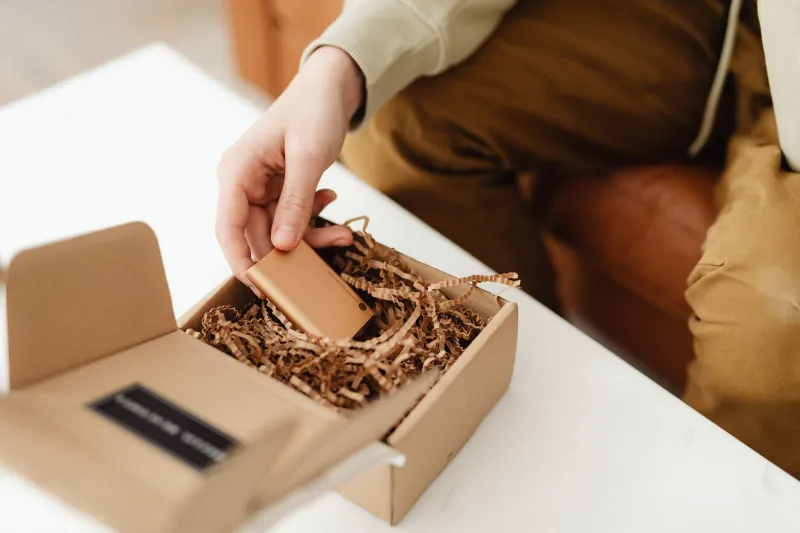
Let's set the scene. You ordered something small. Maybe a phone screen protector. Maybe a single USB-C cable. Maybe — and this is a real category of thing that real people order — one (1) individual birthday candle. You were not expecting fanfare. You were expecting a small envelope, a padded mailer, perhaps a modest poly bag with a smiley face on it.
What arrived instead was a box. A box box. A box with structural integrity. A box that required two hands and a slight bend of the knees. A box that your dog immediately became afraid of. Inside this box: approximately forty percent air pillows, thirty percent void fill paper that someone has clearly crumpled with the energy of someone who has simply stopped caring, and ten percent a smaller box. Inside the smaller box: your item, which is the size of a Tic Tac.
This is the current state of American e-commerce packaging, and it deserves to be examined with the full and unflinching rigor of absolutely made-up journalism.
A Brief History of How We Got Here (Probably)
Somewhere in the late 2000s, a warehouse made a decision. The exact nature of this decision is lost to history, but the outcome is clear: instead of matching box size to item size like a reasonable civilization would do, the American fulfillment center would instead operate on the principle that any box will do, actually.
The leading theories for how this happened include:
The Standardization Hypothesis: Warehouses adopted a small number of standard box sizes for efficiency. The smallest standard size is still, somehow, large enough to mail a cantaloupe.
The Algorithm Hypothesis: At some point, a machine was given authority over box selection. The machine has opinions that do not align with human spatial reasoning.
The Nihilism Hypothesis: The warehouse workers have seen things. They no longer ask questions. They have made peace with putting a lip balm in a priority mailer the size of a welcome mat. It is not their journey.
All three are probably true simultaneously.
A Ranking of the Most Egregious Packaging Crimes Currently Being Committed Against the American Consumer
The Nested Doll: Your item arrives in a box. Inside the box is a slightly smaller box. Inside that box is a padded envelope. Inside the envelope is a plastic bag. Inside the bag is your item: a single guitar pick. The pick is fine. You are not.
The Air Pillow Avalanche: The box is technically the correct size for the item, but someone has filled the remaining eighty percent of the interior with inflatable plastic pillows. When you open the box, they cascade onto the floor. Your cat immediately begins attacking them. You will be popping these for the next four days. This is your life now.
The Inexplicable Packing Peanut Deployment: It's 2024. Nobody agreed to packing peanuts. They were not invited. They are in your carpet.
The Structural Overkill: A hardcover book — a solid, rigid object that is essentially a brick — has been triple-boxed and surrounded by enough bubble wrap to protect a Ming vase during a cross-country move on a dirt road. The book is fine. The book was always going to be fine. The book did not need this.
The Phantom Box: Your tracking says delivered. There is a box on your porch. The box is enormous. You feel a small thrill of anticipation. Inside: a single sheet of packing paper and a lip gloss. You ordered the lip gloss three weeks ago and forgot. It is not worth the box it arrived in. Nothing is worth the box it arrived in.
The Cardboard Is Now Your Problem: A Repurposing Guide
Federal law does not require you to deal with these boxes responsibly, but your municipal recycling program might have opinions. In the meantime, here are legitimate uses for the seventeen Amazon boxes currently stacked against your garage wall:
Fort construction. This is the correct answer for any box larger than eighteen inches in any dimension. If you don't have children, build the fort anyway. Sit in it. It's fine.
Moving. You are going to move at some point. These boxes will be extremely useful then. You will not, however, be able to find them when that time comes.
Giving your dog a cardboard box to destroy. A complete afternoon of entertainment for approximately zero dollars. The box will be in fourteen pieces within the hour. This is the most honest use of the material.
A strongly worded letter to the company. Write it on the inside of the box with a Sharpie. Mail it back in its own box. See what happens.
The Deeper Question Nobody Is Asking
At what point did we, as a society, decide that the item and the vessel containing the item had no necessary relationship to each other? That a single AAA battery — a cylinder approximately the size of a human thumb — required a cardboard container large enough to mail a toaster?
The answer is unknowable. The boxes will keep coming. The air pillows will keep multiplying. Somewhere in a fulfillment center the size of a small town, an algorithm is selecting a box for your order right now, and it has chosen wrong, and it feels nothing about this.
Your item will arrive Thursday. It will be fine. The box will not fit in your recycling bin. You will have to break it down by hand, which requires finding scissors, which are in a different room, which means this has now become a whole thing.
This is the deal. Nobody negotiated it. Here we are.