Autocorrect Has No Remorse: A Damage Assessment of History's Worst Phone-Generated Disasters
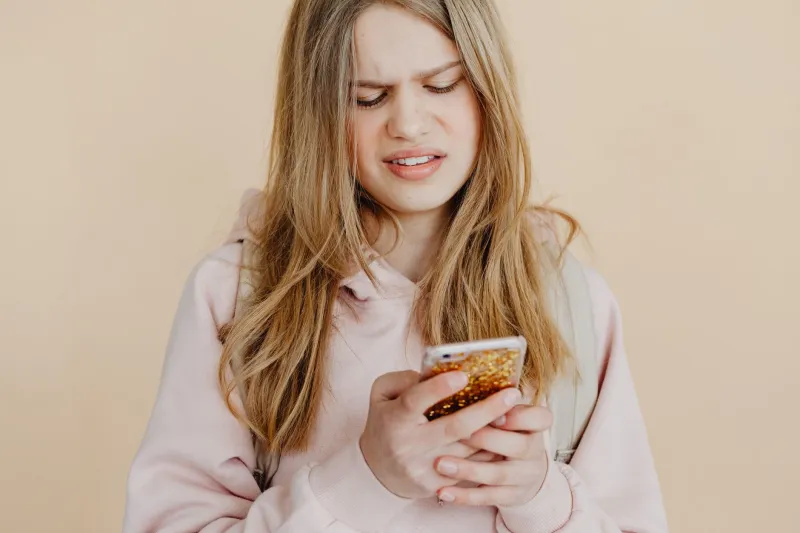
Somewhere inside your phone, a very confident algorithm is waiting. It has studied your vocabulary. It has noted your patterns. It has watched you type the word "definitely" incorrectly seventeen times and decided, unilaterally, that it knows you better than you know yourself. And one day — one perfectly ordinary Tuesday when you're texting your boss about a meeting time or telling your grandmother you love her — it will strike.
Autocorrect was invented to help. It has instead become one of the most reliable sources of social destruction in the modern era. What follows is a comprehensive damage assessment of autocorrect's greatest atrocities, ranked by severity, secondhand embarrassment, and the approximate number of days required to emotionally recover.
Category One: Professional Annihilation
Severity Level: Requires HR Intervention
The Executive Summary That Wasn't
Consider the poor soul who meant to write "Please send the attached files when you get a chance" to their entire department and instead sent "Please send the attacked files when you get a dance." The email went to forty-three people, including two VPs and a compliance officer. The attached files were a Q3 budget projection. Nobody got a dance. The compliance officer replied "?" which, in corporate communication terms, is the equivalent of a full audit.
This is the fundamental tragedy of autocorrect in professional settings: it doesn't just change words. It changes intent. You wanted to sound competent. You now sound like someone who is planning something.
The LinkedIn Recommendation Letter
Someone once tried to write that their colleague was "a dedicated professional with exceptional attention to detail." Their phone, in a moment of pure unhinged confidence, changed "dedicated" to "medicated." The recommendation went live. The colleague saw it. The colleague did not mention it. The colleague has never mentioned it. They still work together. They will work together until one of them retires, and they will never speak of it.
This is the long-tail damage of autocorrect: the things that cannot be unsaid, only archived.
Category Two: Romantic Catastrophes
Severity Level: Requires At Least One Awkward Phone Call to Clarify
The First Date Confirmation
Autocorrect has ended more potential relationships than incompatible love languages and different opinions about whether pineapple belongs on pizza combined. The classic scenario: someone tries to text "I'm really excited to see you tonight" and their phone, having apparently decided that "excited" is a word for quitters, substitutes something that transforms a sweet, hopeful message into something that sounds like a legal threat or a cry for help.
The recipient screenshots it. They show their friends. Their friends say "run." They don't run. They go on the date anyway. The date is fine. They get married four years later and show the screenshot in their wedding toast. This is, genuinely, the best possible outcome.
The "Love You" That Became Something Else Entirely
There exists a documented category of autocorrect failure where someone attempts to send a casual, affectionate "love you" to a partner and their phone — perhaps sensing that the relationship has grown too comfortable — changes it to something completely unrelated. Common substitutions include "live you," "love ypu," and, in one case that has been shared across the internet so many times it has achieved mythology status, "I love YouTube."
Is "I love YouTube" a romantic statement? No. Is it accurate? For many Americans, devastatingly yes. Does it create an awkward fifteen-minute conversation about whether the sender means it literally? Every single time.
Category Three: Family Group Chat Incidents
Severity Level: Brings Up at Thanksgiving for a Minimum of Three Years
The family group chat is autocorrect's preferred hunting ground. Nowhere else do the stakes feel simultaneously so low and so permanent. Your aunt will screenshot it. Your mom will bring it up at Easter. Your dad will say "technology" in a tone of voice that means he blames you specifically.
The Holiday Dinner Coordination Failure
Someone tries to ask whether they should bring "rolls" to Thanksgiving dinner. Autocorrect, having apparently developed opinions about holiday carbohydrates, changes this to something that causes a twenty-message chain of confusion, one family member calling to clarify, and a final resolution where nobody brings rolls because the moment has passed and everyone is slightly unsettled.
Alternatively: someone tries to confirm they're bringing "wine" and their phone decides the family gathering needs "whine" instead, which is technically more accurate but creates a dynamic nobody asked for.
The Birthday Message That Required Explanation
Every family has a story about someone who tried to wish grandma a happy birthday and accidentally sent a message that, due to autocorrect intervention, sounds either threatening, inappropriate, or deeply philosophical. Grandma replied with a series of heart emojis because grandma is built different and refuses to let technology diminish her joy. She is the hero of this story. She always is.
Category Four: The Wrong Person
Severity Level: Varies Wildly, Ranges From Mild Awkwardness to Needing a New Job
Autocorrect's greatest power move is not changing the content of a message — it's ensuring that message reaches the exact wrong recipient. The technology itself may not be responsible for the wrong-person send, but autocorrect's chaos has a way of compounding: the message you sent to your boss instead of your friend is somehow worse because autocorrect also changed three words in it.
You were venting about a coworker. You sent it to the coworker. Autocorrect changed "annoying" to "anointing," which means the message now reads like you're performing a religious ceremony. The coworker has read it four times. They have not responded. You have both been in seven meetings together since. Nobody has said anything.
This is the new normal. We live here now.
Category Five: The Theoretical Worst-Case Scenario
Severity Level: Hypothetically, a Deposition
Legal scholars have not yet addressed the question of whether autocorrect constitutes a mitigating factor in written communication disputes, but they will. The day is coming when someone will stand before a judge and explain that they did not, in fact, write what the text message says they wrote — that their phone, in its infinite algorithmic wisdom, replaced a perfectly reasonable word with something that now appears in a civil complaint.
Until that day, we can only document the near-misses: the contract emails where "sign" became something else, the apology texts where "sorry" was replaced with "sore," the customer service messages that took on a threatening tone that the sender absolutely did not intend.
Autocorrect will not testify on your behalf. Autocorrect has already moved on to its next victim.
In Conclusion: Your Phone Is Not Your Friend
Autocorrect was designed to bridge the gap between human intention and human execution. Instead, it has created an entirely new category of social disaster that previous generations never had to navigate. Your grandparents wrote letters. Their intentions were clear. Nobody's fountain pen spontaneously replaced "sincerely" with "sorcery."
You, however, live in the future. And in the future, your phone finishes your sentences with the confidence of someone who has never once been wrong and the track record of someone who is wrong constantly.
Type carefully. Proofread everything. Trust nothing.
And maybe, just maybe, turn off autocorrect — which your phone will probably change to "autocorrect" anyway, because it has decided that you need it and it is not asking your permission.