Ashes to Ashes, Plug to Plug: A Eulogy for Every Charging Standard That Swore It Was Forever
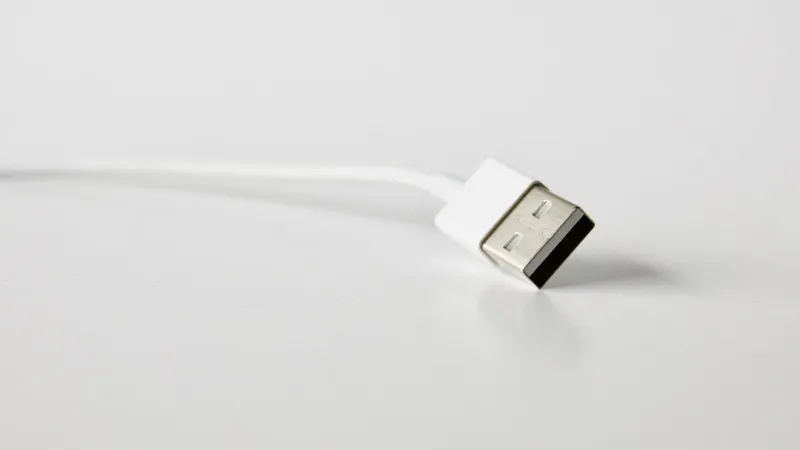
Somewhere in your home — probably in a shoebox under the bed, or in that one kitchen drawer that technically has a purpose but spiritually does not — there is a graveyard. It is full of cables. Cables with strange, vestigial shapes. Cables for devices you no longer own. Cables for devices you cannot even identify. Each one, at some point in its life, was announced to the world as a solution. A universal solution. The solution. The plug that would finally, mercifully, end the chaos.
Reader, it did not end the chaos.
This is their story.
The Fallen, in Chronological Order of Betrayal
Mini USB (2000–2009): The Optimist
Mini USB showed up in the early 2000s with the energy of someone who genuinely believed things were going to work out. It was small! It was standardized! It was going to connect your digital camera, your external hard drive, your GPS unit, and your flip phone all to the same computer!
For a few years, this almost seemed plausible. Then manufacturers looked at Mini USB and thought, yeah, but what if it were slightly worse and also different? And thus began the tradition — honored to this day — of taking a perfectly acceptable connector and immediately engineering around it out of pure spite.
Mini USB died not in battle, but in quiet obsolescence, replaced by its own successor before it even had time to finish its origin story. That's not a retirement. That's a layoff.
Betrayal Score: 6/10. It tried. It really tried. Pour one out.
Micro USB (2007–approximately forever, unfortunately): The Overconfident One
Micro USB arrived with swagger. It was thinner than Mini USB. It was stronger. The USB Implementers Forum — yes, that's a real organization of people whose entire professional identity involves arguing about plug shapes — declared it a universal standard. Entire continents adopted it. The European Union basically made it law. For a period of roughly eight years, Micro USB was on every Android phone, every Bluetooth speaker, every cheap portable fan you bought at a gas station.
And then it revealed its true character.
Specifically: you could only plug it in one way, and that way was invisible to the naked eye in any lighting condition that exists in the real world. The connector wore down after approximately four months of normal use. And — this is the part historians will study — it was slightly asymmetrical in a way that made you feel insane every single time you tried to use it after midnight.
Micro USB didn't die so much as it refused to leave. It is still, right now, on some device you own. You know which one. You hate it.
Betrayal Score: 9/10. The audacity of longevity without improvement. Unconscionable.
Proprietary Connectors (Various Manufacturers, Various Crimes): The Mercenaries
While USB was busy betraying the consumer market, an entire shadow economy of proprietary charging connectors was flourishing. Samsung had its own thing. Nokia had its own thing — multiple things, actually, because Nokia in its prime had the energy of a company that genuinely believed it would outlive the sun. Motorola had a connector so specific it only worked with two phones and a now-defunct Bluetooth headset.
These cables weren't trying to be universal. They weren't even trying to be good. They existed to ensure that when you forgot your charger at a hotel in Columbus, Ohio, there was a zero percent chance the front desk had a spare. They were a $29.99 replacement cable sold exclusively at airport kiosks. They were intentional.
The proprietary connector era is the Tech Nonsense equivalent of a protection racket, and the fact that we all just accepted it for fifteen years is the most damning evidence that consumers, collectively, have the memory of a golden retriever who keeps running into the same sliding glass door.
Betrayal Score: 10/10. No notes. Pure villain energy.
Apple Lightning (2012–2023): The Dramatic One
Oh, Lightning. Lightning.
Apple introduced the Lightning connector in 2012 by spending twenty minutes at a press conference explaining why the previous connector — the 30-pin dock connector, which had existed since 2003 and which everyone had just finished buying accessories for — was bad, actually. The Lightning connector was reversible! You could plug it in either way! It was elegant! It was the future!
And, to be entirely fair, it was reversible, which felt like a genuine miracle at the time and says a lot about how low the bar had been set by Micro USB. Apple fans bought new cables. They bought new adapters. They bought little dongle things that converted the old accessories to the new port. They did this cheerfully, because that's the particular psychological condition that a decade of Apple marketing can induce.
Lightning lasted eleven years. Eleven years of Apple telling the EU, which kept trying to mandate USB-C, that Lightning was actually fine and different was not the same as worse. Then, in 2023, the EU won, and Apple switched to USB-C, and every Lightning cable on earth became a $9 paperweight simultaneously.
The real twist? Lightning was technically better than Micro USB for most of its life. It just wasn't better than USB-C, which Apple had been putting in MacBooks since 2015 while simultaneously insisting iPhones needed their own special plug. The audacity of that seven-year overlap will be studied in business schools.
Betrayal Score: 8/10. Technically competent. Spiritually unforgivable.
And Now, USB-C: Our Current Savior (Please Don't Let Us Down)
USB-C is reversible. It handles data, video, and power. It's on your phone, your laptop, your monitor, your Nintendo Switch, and your fancier kitchen appliances if you've been making some interesting choices at Best Buy. It is, by every measurable standard, the best connector the consumer electronics industry has ever managed to produce.
It also comes in approximately forty different performance tiers that are physically identical and entirely indistinguishable without a degree in electrical engineering or the specific cable's retail packaging, which you definitely threw away.
Some USB-C cables charge quickly. Some charge slowly. Some transfer data at 40 gigabits per second. Some transfer data at the speed of a fax machine in 1987. They look the same. They feel the same. They are, for all practical purposes, a new form of chaos wearing a universal connector as a disguise.
USB-C did not end the cable drawer. It diversified it.
A Moment of Silence
For every cable in the shoebox. For every adapter you bought at an airport. For every Christmas morning ruined by a device that shipped with a charger incompatible with every other charger in the house. For the Nokia barrel connector, the Samsung 20-pin, the proprietary Kindle port that existed briefly in 2011 and has never been explained.
You were promised a universal standard. You received, instead, a rotating cast of universal standards, each one sincere in its moment and catastrophic in its legacy.
The drawer is still full. The chaos endures. And somewhere, an engineer is already designing USB-D.
We will buy it. We always do.