Gone Without a Trace: An Exhaustive Investigation Into the Dryer's Ongoing Sock Abduction Program
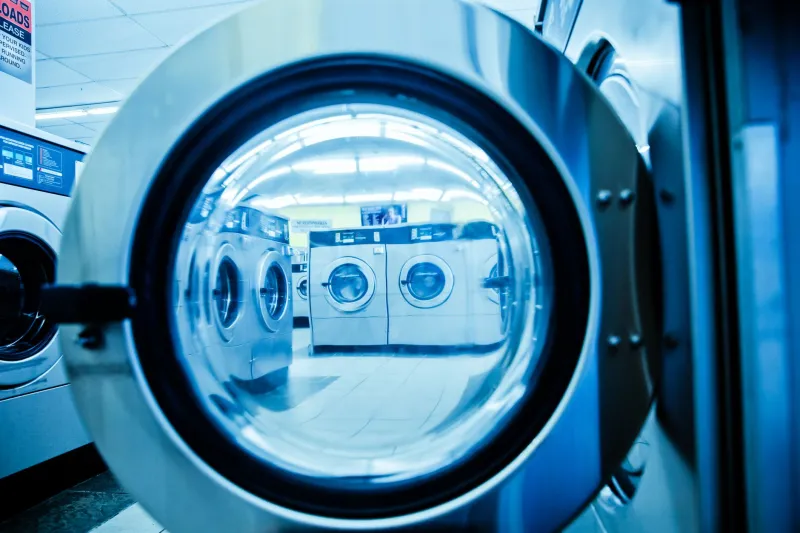
At some point in your life — probably a Tuesday, because Tuesdays are where dignity goes to die — you stood in front of your dryer holding one sock. Just the one. You checked the drum. You checked behind the drum. You checked the floor, the laundry basket, the washing machine, the pocket of a jacket you haven't worn since 2019. Nothing. Its partner was simply gone.
This has happened to every American alive today. It has happened to their parents. It happened to their grandparents. It will happen to their children. And in all that time, across all those laundry loads, across all those bewildered moments of sock-based grief, science has produced exactly zero satisfying explanations.
Welcome to the Sock Singularity. Population: whatever half of a pair equals.
The Leading Theories, Ranked by How Embarrassing They Are to Believe
Before we get into the physics — and we will get into the physics, God help us — let's survey the intellectual landscape of existing sock disappearance theories. The academic community has not covered itself in glory here.
Theory 1: The Wormhole Hypothesis. A small but passionate corner of the internet believes that consumer-grade dryers generate localized spacetime distortions sufficient to transport individual socks to an alternate dimension. Proponents point to the drum's rotation speed, the heat element, and the static electricity buildup as the necessary trifecta for spontaneous wormhole generation. Physicists have declined to comment, which the wormhole community considers a tacit endorsement.
Theory 2: The Lint Trap Transmutation Theory. The sock doesn't disappear. It becomes the lint. This one sounds insane until you consider that lint has to come from somewhere, and no one has ever actually watched it accumulate in real time. Where was this lint before it was lint? Was it ever a sock? Was it your sock? The lint trap is full of secrets and we are not asking enough questions.
Theory 3: The Dryer Cult. The dryer is not a machine. It is a congregation. It demands tribute. One sock per load is the tithe, and the appliance gods will not be denied. This theory explains why it's always one sock, never two, never a full shirt. Cults have standards.
Theory 4: You Just Lost It, Buddy. The least satisfying theory. Statistically the most likely. We reject it on emotional grounds.
A Taxonomic Ranking of Socks by Their Likelihood of Vanishing
Not all socks are equally at risk. After extensive analysis of laundry data (our own laundry, over several emotionally turbulent years), Pointlesspedia has identified a clear vulnerability hierarchy.
Extreme Risk — Gone Before the Cycle Ends:
- Any sock that is part of a matched set you actually like
- Novelty socks featuring a specific pattern (avocados, dinosaurs, your dog's face) that cannot be replicated
- The left sock of any pair, specifically and inexplicably
- Compression socks costing more than $18
High Risk — Will Disappear Within Three Washes:
- Any sock gifted to you by someone who will definitely ask if you're wearing it
- White ankle socks purchased in bulk (one will survive; it will be alone forever)
- Socks with a specific day of the week printed on them, always the day you need most
Moderate Risk — May Survive, Will Be Damaged:
- Thick wool hiking socks (too proud to disappear, but they will shrink into something a toddler would wear)
- Any sock with a reinforced toe that cost you actual money
Low Risk — Basically Immortal:
- The ugliest sock you own, the one with the hole in the heel you keep meaning to throw away
- Socks you received as a joke gift and would be fine losing
- That one tube sock from 2011 that has survived three moves, two relationships, and a pandemic
The pattern is clear. The dryer knows what you value. It acts accordingly.
The Physics Have, In Fact, Given Up
We reached out to several physics departments for comment on the Sock Singularity. Most did not respond. One professor replied with a single sentence: "The drum creates a low-pressure zone near the gasket that can trap items between the drum and the outer tub."
This is the official scientific explanation. A gap. A gap is responsible for the greatest ongoing domestic mystery in American life. We are being asked to accept that a gap — passive, static, architecturally unremarkable — has been systematically consuming our hosiery for decades without anyone in the appliance industry suggesting that perhaps the gap should be smaller.
The gap has a lawyer. That's the only explanation.
The Nuclear Option: A Cost-Benefit Analysis of Going Full Identical Sock
At some point, a reasonable person looks at their drawer of orphaned socks and considers the unthinkable: buying thirty pairs of the exact same sock and never matching again.
Let's run the numbers.
Initial investment: 30 pairs of identical black crew socks, mid-tier brand — approximately $45.
Psychological relief: Immediate and profound. Every sock in the drawer is a valid partner for every other sock. The concept of a "missing" sock becomes philosophically incoherent. You have achieved laundry enlightenment.
Drawbacks:
- You will feel a faint, persistent sadness at sock-related holidays (yes, sock-related holidays exist; December 4th is National Sock Day and we're not apologizing for knowing that)
- The dryer will still take one. It always takes one. Now it just matters less.
- Guests who see your sock drawer will know something about you that you cannot un-show them
Verdict: Do it. Do it immediately. The matching system was a social construct and you are free.
Closure Is Not Coming. Here Is What You Do Instead.
The Sock Singularity will not be solved. Physicists have moved on. Appliance manufacturers have accepted the gap as load-bearing. The wormhole people are too busy to help.
What you can do is mourn correctly. Hold a brief ceremony for each fallen sock. Repurpose the survivor as a cleaning rag, a dog toy, or a tiny puppet for processing your feelings. Release it into the world. Let it go.
And then go buy thirty pairs of identical socks like the rational, battle-tested adult you have finally become.
The dryer will claim one. It always does. But now? You won't even notice.