Unexpected Item in the Bagging Area: A Survivor's Account of Being Publicly Humiliated by a Machine That Needs Your Help to Function
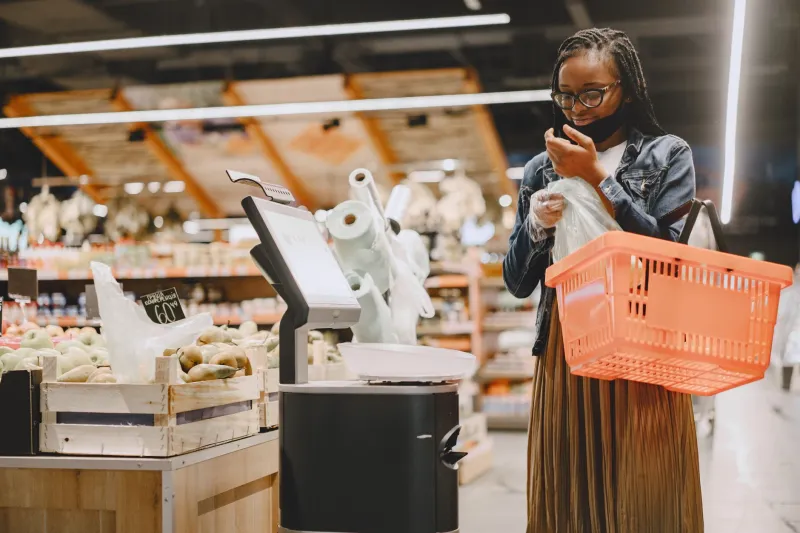
It begins the same way every time. You approach with confidence. You have done this before. You are a functioning adult who has successfully completed hundreds of transactions. You scan the first item. It beeps. You feel good. You place it in the bagging area. And then, from a speaker that has no business being this loud in a public space, a voice says:
'Please place the item in the bagging area.'
The item is in the bagging area. You placed it there. You watched yourself do it. The machine watched you do it. And yet here we are.
Welcome to Pointlesspedia's definitive investigation into the self-checkout kiosk — the plastic rectangle that has somehow convinced the entire American retail industry that being verbally corrected by a scale is a satisfying customer experience.
A Brief History of How We Got Here and Who to Blame
The self-checkout machine was first commercially deployed in the early 1990s. The promise was elegant: reduce labor costs, speed up checkout, give customers autonomy. The pitch to consumers was essentially you can be your own cashier! which, when you think about it, is the same energy as a restaurant handing you an apron and saying you can be your own line cook!
Somewhere between that original pitch and the current reality, the machine developed opinions. Not just preferences — opinions. Strong ones. About where your item is. About whether your coupon is real. About the precise weight of a banana and whether you, specifically, are lying about it.
Retail analysts estimate that self-checkout now accounts for over 30% of grocery transactions in the US. This means that roughly one-third of all American grocery trips now include at least one moment of being publicly corrected by a computer that you are actively helping do its own job.
This is what we chose. We walked into this.
The Complete Taxonomy of Self-Checkout Grievances
Grievance Class One: The Bagging Area Accusation
The bagging area scale is the machine's most powerful psychological weapon. It knows what the item should weigh. It believes what it knows. It does not believe what it sees.
You place the item. The scale disagrees. The machine announces this disagreement to the surrounding area. Other customers look. You look at the machine. The machine looks at nothing because it has no eyes, only judgment.
Variants include:
- 'Item removed from bagging area' — You did not remove the item. The item is right there. You are looking at it.
- 'Unexpected item in bagging area' — This is your bag. You brought it. It was not unexpected to you.
- 'Wait for assistance' — This is the machine tapping out. This is the machine saying it has done everything it can and now a human must come fix the situation created by the machine.
Grievance Class Two: The Produce Code Labyrinth
At some point, someone decided that buying a single lime should require a customer to navigate a touchscreen produce directory organized by a logic that has never been explained to anyone.
You press 'vegetables.' The lime is not there. You press 'fruits.' You scroll. There are seventeen varieties of apple listed. There is a subcategory for pears. You search 'lime.' The machine shows you lemon. You select lemon because you have been here for four minutes and you need to move on. You know this is wrong. The machine does not care. The machine has never seen a lime.
Grievance Class Three: The Coupon Rejection Ceremony
You have a coupon. The coupon is valid. The coupon says so on the coupon. You scan the coupon. The machine considers the coupon. The machine rejects the coupon. The machine offers no explanation. The coupon exists in a state of being both valid and unacceptable, a retail Schrödinger's box that can only be resolved by calling for the attendant who is currently managing eleven other machines having their own crises.
The attendant will come. The attendant will scan something. The coupon will work. Nobody will explain what changed. This is the system.
Grievance Class Four: The Slow, Condescending Voice
Every self-checkout machine speaks in the same voice — measured, calm, slightly disappointed. It is the voice of someone who expected more from you. It is the voice of a substitute teacher who has seen everything and is no longer surprised by any of it.
'Please scan your rewards card.'
You scanned it. The machine knows you scanned it. The machine is asking again for reasons of its own.
'Thank you for shopping with us.'
This is not gratitude. This is a legal requirement. The machine does not feel gratitude. The machine does not feel anything. The machine is already resetting for the next person it will gaslight.
Retailers Ranked by Self-Checkout Aggression Level
Walmart — The platonic ideal of self-checkout chaos. Walmart's machines have the confidence of an institution that knows you have nowhere else to go. The weight sensors are calibrated for maximum suspicion. The attendant-to-machine ratio suggests that Walmart has thought carefully about how many people can be having problems at once and has decided: all of them.
Kroger / Safeway — Mid-tier aggression. The machines are older and have developed quirks that regular customers learn to accommodate, like a difficult roommate whose patterns you've memorized. You know the lime trick. You know to scan the card before the first item. You have adapted. This is not healthy.
Target — Target's self-checkout machines have the same aesthetic energy as the rest of the store — clean, friendly, vaguely aspirational. They are still going to stop you for a produce item. They will just do it in a nicer font.
Whole Foods — The machines here are technically sophisticated and deeply committed to the premise that you are attempting fraud. Given the price of the items, perhaps this is reasonable.
Costco — Costco does not have traditional self-checkout. Costco has a receipt checker at the exit who will look at your cart and your receipt with the focused energy of someone who has caught people before and believes they will catch someone today. This is different from a machine but belongs in this conversation spiritually.
Why Do We Keep Coming Back
This is the question that keeps retail psychologists employed. The self-checkout experience is, by any objective measure, frequently worse than the staffed lane. It is slower. It is more error-prone. It requires labor from the customer while simultaneously accusing the customer of doing the labor incorrectly.
And yet.
There is something about the staffed lane — the social obligation, the small talk, the performance of being a normal person making normal purchases — that a significant portion of the population actively wants to avoid. The self-checkout machine, for all its failures, does not make conversation. It does not comment on your frozen burritos. It does not make eye contact.
It just accuses you of putting unexpected items in the bagging area.
And honestly? At this point? That's practically intimacy.
A Closing Statement
You will go back. We all go back. We will scan our items and place them in the bagging area and wait for the machine to decide whether we have done it correctly. We will search for our lime under seventeen apple varieties. We will stand in front of a touchscreen in a fluorescent-lit grocery store and negotiate with a scale about the nature of reality.
And when the machine says 'thank you for shopping with us,' we will take our bags and go.
Because the staffed lane has four people in it and we just need to get home.
The machine wins. The machine always wins.